

Solar Roof Integration for Commercial Buildings starts with the condition of the roof in front of us
Roof-first solar integration in Grand Rapids: PV racking penetrations, membrane compatibility, structural load and uplift, and coordinated roofer-and-installer warranties.
We get the same phone call several times a season: a property owner has a signed solar proposal in hand and wants to know whether their roof can carry the array. It is the right question, and it usually arrives a step too late. A photovoltaic system is a 25-to-30-year asset bolted onto a roof membrane that may have a fraction of that life left. We look at the membrane first, the array second, because once panels and racking are in place, every future roofing decision gets more expensive and more disruptive. On a flat commercial roof in Grand Rapids, that ordering discipline is what separates a clean install from a recurring headache.
Our work on these projects is the roofing half of the job. We do not sell panels or inverters. What we do is make sure the assembly the panels sit on is sound, that every point where steel meets membrane is detailed correctly, and that nothing the solar crew does on the roof quietly voids the warranty you are counting on. That coordination is where most rooftop PV problems are born, and where they are most cheaply prevented.
West Michigan has real momentum behind commercial solar, and the building stock here lends itself to it. The large-footprint distribution and manufacturing buildings along the 28th Street corridor and out toward Kentwood and Wyoming offer exactly the kind of wide, unobstructed low-slope roofs that ballasted arrays prefer. The medical and office concentrations on the Michigan Street "Medical Mile" and the renovated industrial blocks of the West Side and Monroe North district are looking at PV as both an operating-cost play and a sustainability commitment. Consumers Energy is the dominant utility across most of Kent County, and its rate structure and interconnection rules shape how an array pencils out - which is exactly why the roof beneath it has to be a non-issue for the next two decades, not a question mark.
There is also a weather reality. Grand Rapids sits downwind of Lake Michigan, and lake-effect snow loads are not theoretical here - the metro routinely sees among the highest seasonal snowfall totals of any major city in the country. An array changes how snow drifts and sheds on a roof, and it adds dead load on top of whatever snow accumulates. Those two facts have to be in the structural conversation from the start.
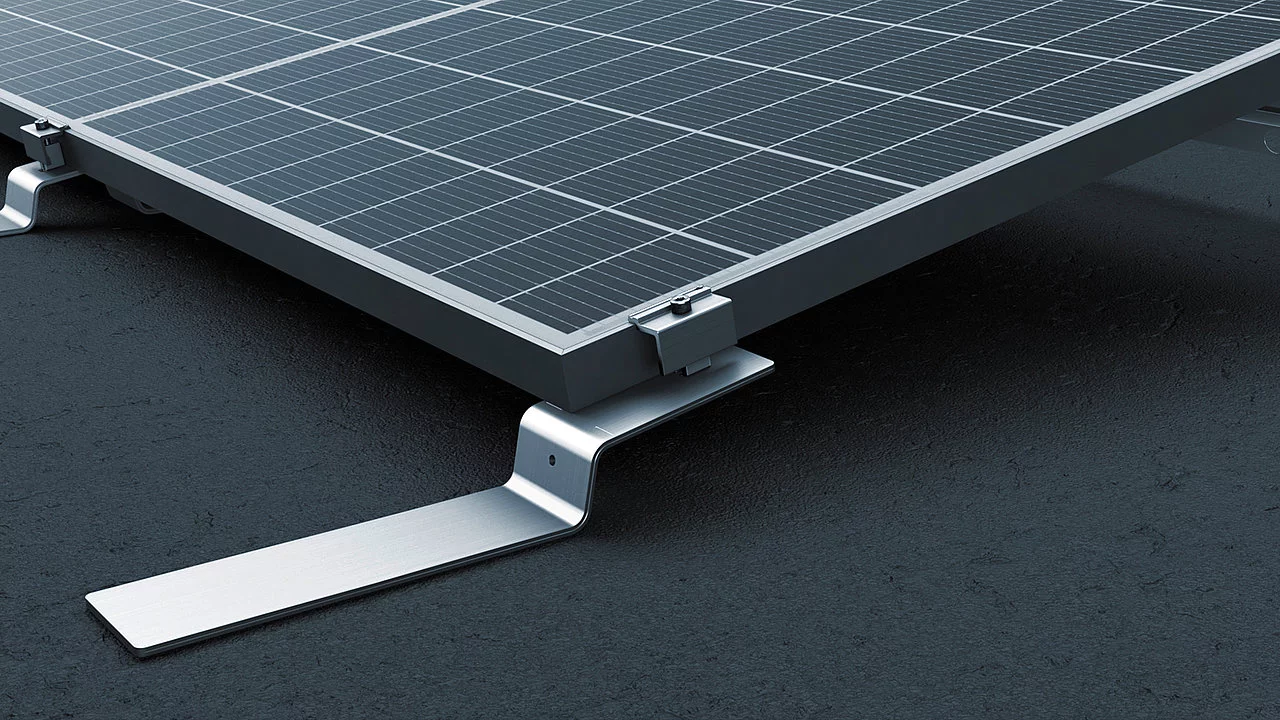
Before anyone talks about panel count, we want to know what the deck and structure can actually carry. A ballasted racking system - the most common approach on flat membranes because it avoids penetrations - holds the array down with concrete pavers or ballast blocks distributed across the roof. That ballast is real weight, often several pounds per square foot added across the whole array zone, and it stacks on top of snow load. On the older bar-joist and steel-deck buildings common in Grand Rapids' industrial districts, the original design load may have little margin for it. We coordinate with the structural engineer to confirm the assembly can take combined ballast, snow, and live load before the racking layout is finalized.
Wind is the other half of the equation. A solar array is a low aerodynamic profile, but the perimeter and corner zones of any roof see the highest uplift pressures, and a poorly ballasted or under-anchored array can shift or lift in a strong event. The racking layout has to account for those wind zones, with added ballast or mechanical attachment where the engineering calls for it. We would rather see a conservative layout that stays put through a Lake Michigan windstorm than a lighter one that needs a service call every spring.
Questions We Answer Before Work Starts
How do you decide whether Solar Roof Integration for Commercial Buildings needs repair or replacement?
We start with roof condition, moisture concerns, drainage, age, access, and recurring leak history. Repair is recommended when it solves the problem cleanly. Replacement is discussed when repeated repairs are only chasing symptoms.
Can the building stay open during solar roof integration for commercial buildings work?
Most commercial roof work can be staged around an active building when access, loading, noise, odors, and end-of-day dry-in are planned before crews arrive.
What do owners receive after an inspection?
Typical documentation includes photos, notes on membrane and metal conditions, drain observations, repair priorities, and a practical next-step recommendation.