

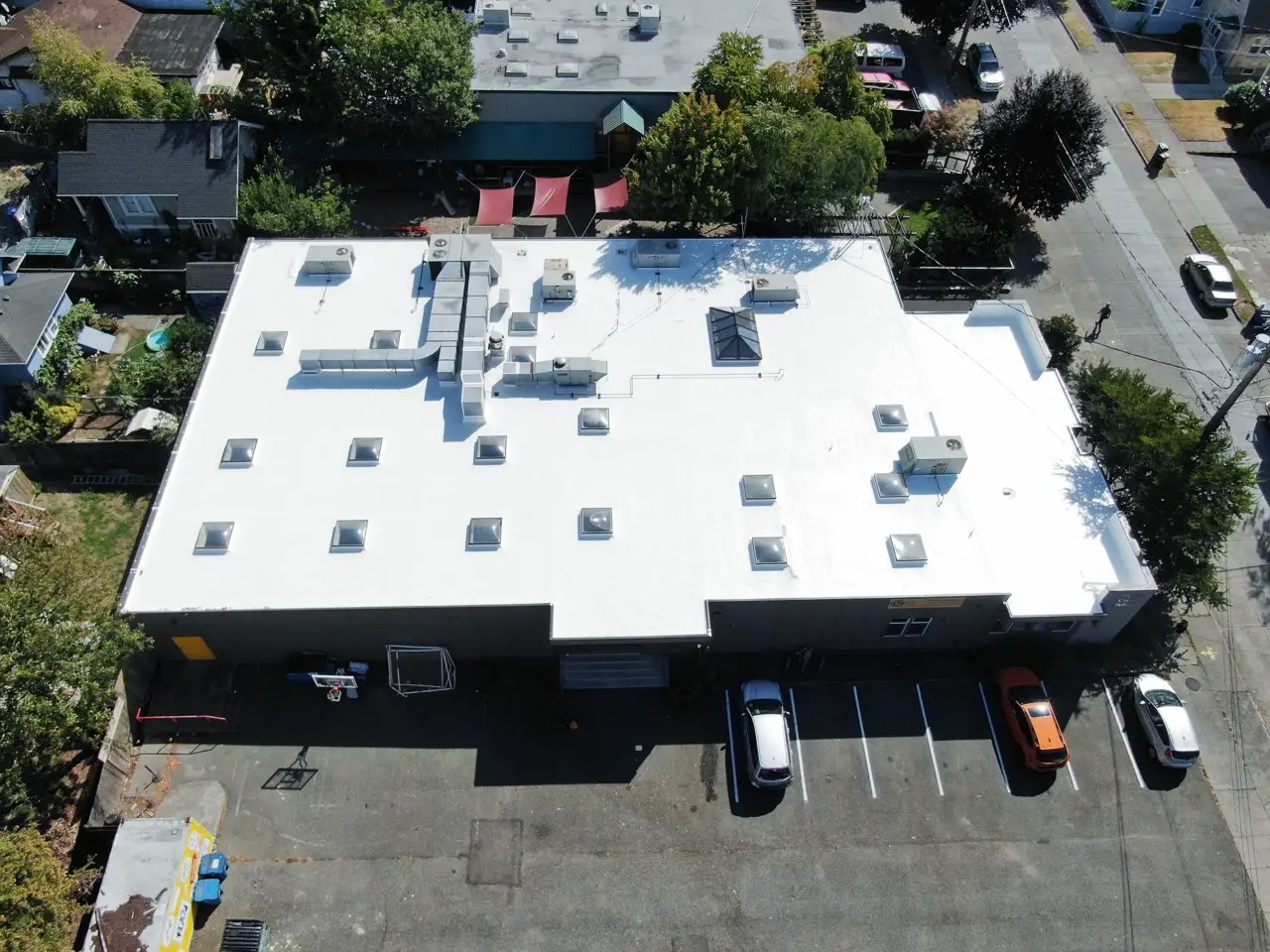
School and K-12 Educational Building Roofing starts with the condition of the roof in front of us
Commercial roofing for K-12 schools, private academies, and educational campuses.
Grand Rapids Public Schools, the second-largest school district in Michigan with more than 14,000 students across approximately 50 schools, represents a substantial and ongoing commercial roofing market in West Michigan. The district's building stock includes elementary and middle schools built across multiple generations, from pre-World War II masonry structures in the city's older neighborhoods to contemporary facilities constructed during more recent bond-funded modernization programs. Each generation of school building presents its own set of roofing challenges, and contractors who serve Grand Rapids Public Schools understand the district's procurement requirements, budget cycles, and the academic calendar constraints that govern when roofing work can be performed.
Summer scheduling is the governing constraint for school roofing projects in Grand Rapids. Michigan's academic calendar provides a summer window of approximately 10 to 12 weeks - typically from late June through late August - during which major roofing work on occupied school buildings can proceed. Within this window, contractors must mobilize promptly after the school year ends, maintain consistent daily production, and achieve substantial completion before back-to-school activities begin in late August. Projects that fall behind schedule during the summer risk conflict with occupancy, creating safety and liability issues that the district takes seriously and that damage the contractor's standing for future opportunities.
The district's capital improvement program is funded through general obligation bonds approved by Grand Rapids voters, supplemented by state aid for school building construction where applicable. Bond spending plans are developed with input from the community, reviewed by an independent citizens' oversight committee, and approved by the Board of Education. Contractors who track bond program developments through public school board meetings and district planning documents can anticipate the multi-year pipeline of roofing projects and position themselves early in the bid process. The GRPS facilities department maintains working relationships with contractors who demonstrate knowledge of the district's building stock and a commitment to quality school construction.
Grand Rapids Public Schools' diverse building inventory presents roofing contractors with a wide range of system types and conditions. Older buildings may have multiple layers of built-up roofing that must be assessed for asbestos content before any tear-off proceeds. Mid-century flat-roof elementary schools may have original gravel-ballasted systems long past their service life. Newer buildings typically have single-ply systems that may need recovering or replacement depending on age and condition. A systematic roof condition assessment - covering all buildings in the district's inventory on a rotating basis - is the foundation for rational capital planning that the district's finance team and bond oversight committee can rely on.
Michigan's climate is particularly demanding for school roofing systems. Snow loads, ice dams, freeze-thaw cycling, and the spring runoff that follows a heavy winter all test the performance of school roofs. Flat-roof elementary schools in Grand Rapids frequently develop ice dam problems at eave transitions where interior heat melts snow from below, creating water that refreezes at the cold roof edge. During re-roofing, addressing these conditions - through tapered insulation, improved vapor control, and eave-edge heating systems where warranted - prevents the recurring interior water damage that disrupts classrooms and generates emergency maintenance calls throughout the winter.
Institutional roofing specifications for Grand Rapids Public Schools emphasize durability and long service life over first cost. The district's facilities leadership understands that the difference in longevity between a 15-year and a 25-year roofing system - when amortized over the building's useful life - is modest compared to the disruption and cost of premature re-roofing. Specifications typically call for fully adhered or mechanically attached single-ply TPO or PVC membranes over tapered polyisocyanurate insulation, with robust flashing details at penetrations, parapets, and equipment curbs that are designed for the maintenance realities of a school environment.
Questions We Answer Before Work Starts
How do you decide whether School and K-12 Educational Building Roofing needs repair or replacement?
We start with roof condition, moisture concerns, drainage, age, access, and recurring leak history. Repair is recommended when it solves the problem cleanly. Replacement is discussed when repeated repairs are only chasing symptoms.
Can the building stay open during school and k-12 educational building roofing work?
Most commercial roof work can be staged around an active building when access, loading, noise, odors, and end-of-day dry-in are planned before crews arrive.
What do owners receive after an inspection?
Typical documentation includes photos, notes on membrane and metal conditions, drain observations, repair priorities, and a practical next-step recommendation.