

Office Building Roofing starts with the condition of the roof in front of us
Commercial roofing for office buildings, professional parks, and corporate campuses.
Amway's World Headquarters campus in Ada, Michigan - just east of Grand Rapids - is one of West Michigan's most prominent corporate office environments, and it represents the kind of high-profile, Class A campus where roofing quality, aesthetics, and longevity are directly tied to the corporation's brand. The Grand Rapids metro office market encompasses Class A towers in the downtown medical mile corridor, suburban campuses along the East Beltline and 28th Street corridors, and newer mixed-use office buildings in the Acme and Byron Center growth areas. Commercial roofing on occupied West Michigan office buildings requires navigating the region's demanding climate and the operational sensitivity of professional office environments simultaneously.
Occupied-building protocols for Grand Rapids office re-roofing reflect the Michigan climate's narrow work windows. The optimal roofing installation season runs from May through September, after the spring thaw stabilizes the roof deck and before early November when sub-freezing temperatures begin to compromise adhesive performance and membrane flexibility. Within this window, contractors working on occupied buildings schedule the noisiest work - deck repair, tear-off, mechanical fastening - for agreed weekend or early-morning windows, coordinating with building management to minimize disruption to tenants who are often on abbreviated summer schedules that provide flexibility for intensive work phases.
Green roof options have found a receptive market in Grand Rapids' sustainability-minded business culture, particularly among technology and healthcare tenants who value visible sustainability commitments. West Michigan's climate supports extensive green roof applications with sedums and prairie species that can tolerate Michigan winters, and the region's relatively reliable spring rainfall reduces irrigation demands compared to arid markets. Several Grand Rapids corporate campuses have installed biodiverse green roof sections that serve both stormwater management and employee amenity functions, providing outdoor break areas that command premium lease rates in competitive tenant negotiations.
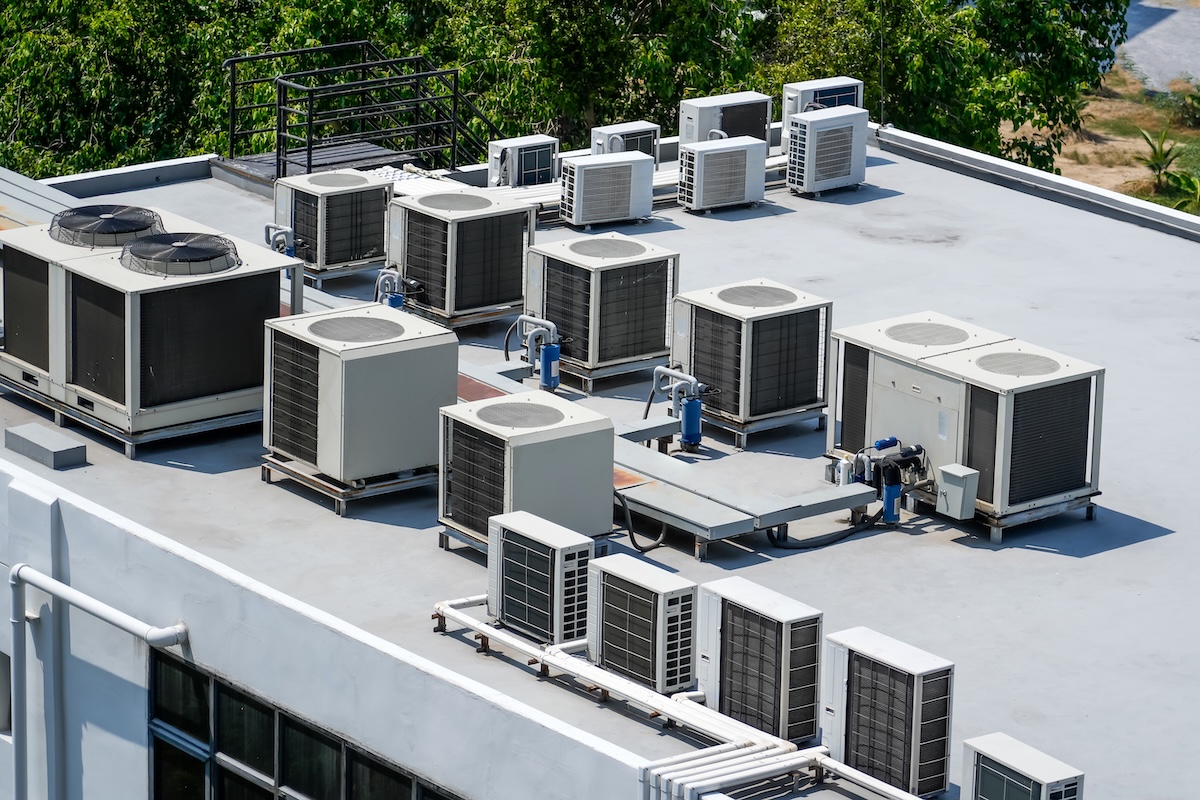
Multi-RTU coordination on Grand Rapids office buildings requires planning that accounts for Michigan's seasonal timing. Re-roofing projects that extend into fall must ensure that all RTUs are fully operational before the heating season, as a delayed RTU reconnection that leaves a floor without heat during a November cold snap creates an immediate tenant complaint and potential lease liability. The re-roofing contractor, HVAC service provider, and building management must have a clearly documented sequencing plan with explicit completion milestones tied to calendar dates rather than vague project phases.
Michigan's energy code, part of the Michigan Energy Code aligned with IECC, requires minimum insulation R-values and reflectance standards for replacement commercial roofs. Climate Zone 5A requirements for Grand Rapids mandate minimum R-30 continuous insulation on new low-slope commercial roofs, and replacement roofing projects exceeding 50% of the roof area trigger compliance with these standards. Polyisocyanurate insulation in adequate thickness to meet R-30 is standard for Grand Rapids office re-roofing projects, though contractors should account for the cold-temperature R-value reduction of polyiso during winter performance calculations.
Reflective membranes for Grand Rapids office buildings present a nuanced design question that differs from warmer markets. Climate Zone 5A includes significant heating-dominated months where a dark membrane would absorb solar radiation and reduce heating loads, while the cooling season benefits of reflectance are real but shorter than in southern markets. Energy modeling for specific buildings in the Grand Rapids market generally shows that high-reflectance membranes are energy-neutral to slightly positive on an annual basis, and the insurance, aesthetic, and tenant preference advantages of white TPO or modified bitumen with aluminum coating typically tip the decision toward reflective systems regardless of the heating season calculus.
Questions We Answer Before Work Starts
How do you decide whether Office Building Roofing needs repair or replacement?
We start with roof condition, moisture concerns, drainage, age, access, and recurring leak history. Repair is recommended when it solves the problem cleanly. Replacement is discussed when repeated repairs are only chasing symptoms.
Can the building stay open during office building roofing work?
Most commercial roof work can be staged around an active building when access, loading, noise, odors, and end-of-day dry-in are planned before crews arrive.
What do owners receive after an inspection?
Typical documentation includes photos, notes on membrane and metal conditions, drain observations, repair priorities, and a practical next-step recommendation.