

Mixed-Use Development Roofing changes access, staging, and risk below the roof
Mixed-Use Development Roofing in Grand Rapids, MI - commercial roofing for mixed-use development roofing properties.
The mixed-use buildings going up across downtown Grand Rapids and the surrounding neighborhoods are not single roofs - they are stacked uses that each put a different demand on the envelope. Ground-floor retail or a parking podium, apartments or condos above, sometimes office floors in between, and a rooftop where residents actually spend time. Michigan Street's Medical Mile, the redevelopment along Bridge Street and the West Side, the apartments and storefronts filling in around the Heartside district and Wealthy Street - these projects bundle retail, residential, and structured parking into one footprint. Our job is to treat each surface as the system it actually is and then tie the whole thing under coordinated warranties, because a developer does not want three separate finger-pointing arguments when something drips into a leased unit.
The single most expensive mistake on a Grand Rapids mixed-use project is specifying a podium deck like it is a low-slope roof. The deck between grade-level parking or retail and the occupied floors above carries foot traffic, sometimes vehicle traffic, planters with live root systems, and standing hydrostatic pressure in landscaped areas. That calls for a traffic-bearing waterproofing assembly - drainage composite, root barrier, protection course, the works - engineered with the structural team for deflection and load path. A standard mechanically attached membrane laid over that deck typically fails within a few years, and on a mixed-use building a podium failure leaks straight into finished retail or residential space below. We scope podium decks and plaza levels as waterproofing assemblies from the start.
Above the podium, the actual roof areas vary across the building. There is usually a main low-slope field over the top residential floor, smaller terrace and setback roofs where the massing steps back, parapet conditions around the perimeter, and a mechanical penthouse with its own flashing. Each of those areas may sit under a different manufacturer detail, and the developer's lender will want it all registered cleanly. We map the warranty boundaries up front - which membrane covers which zone, where the waterproofing warranty ends and the roofing warranty begins, and how the two meet at the podium-to-wall transition - so there are no orphaned details that nobody warranties.
By the time many of these roofs need attention, the retail is leased and the apartments are full. That changes the entire approach. Downtown Grand Rapids has noise ordinances that constrain early-morning and late work, ground-floor shops need their entrances and sidewalks usable through business hours, and residents above expect their building to stay dry overnight. We build a phasing plan that sequences the work in sections, contains dust and debris over occupied space, and confirms each section watertight in writing before the crew leaves for the day. Crane picks and material hoisting get coordinated with building management so they do not block a retail loading zone or a resident garage entrance during peak hours.
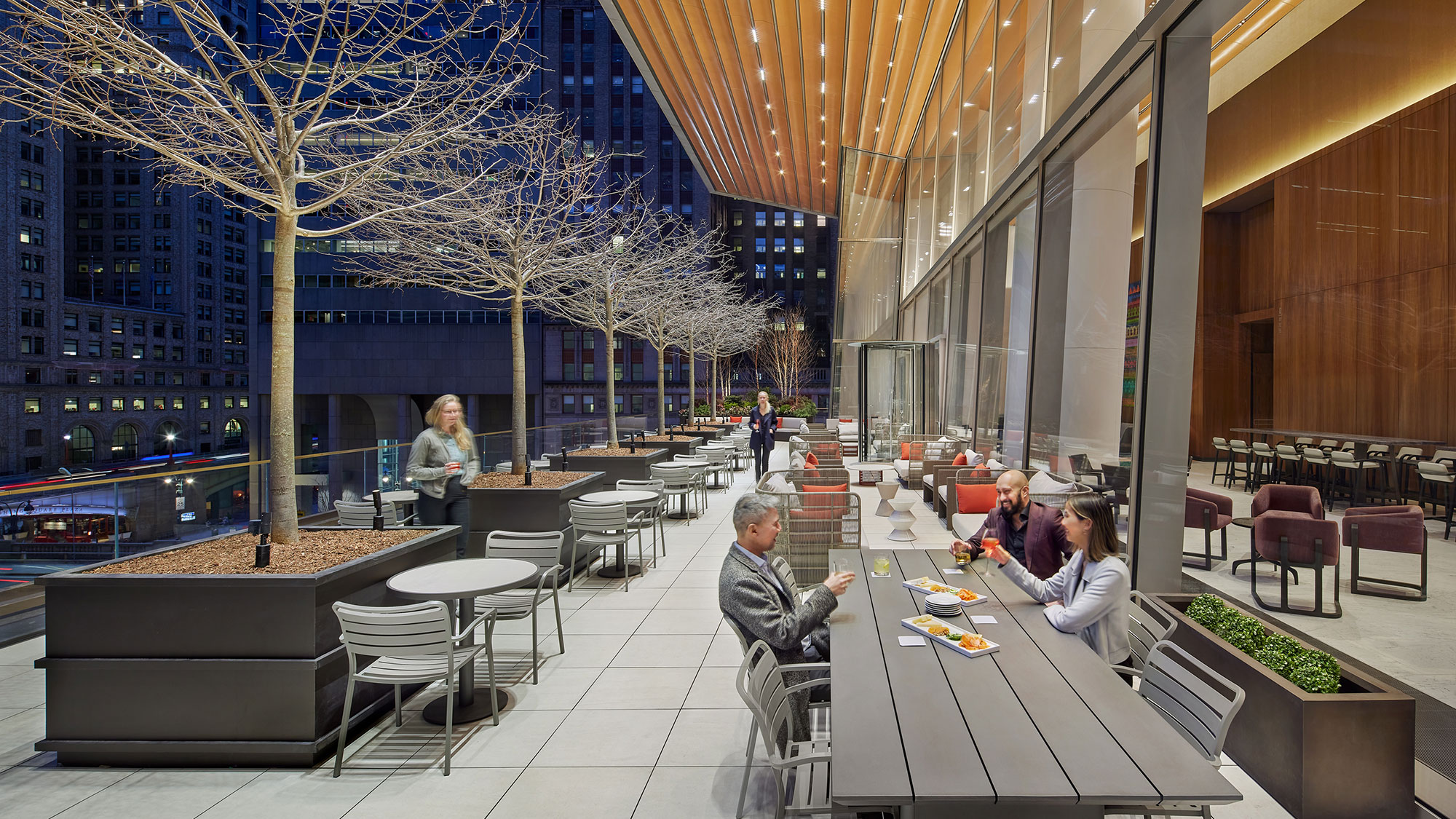
Mid-rise and high-rise mixed-use buildings here increasingly put an amenity deck on the roof - a residents' terrace, a grilling area, sometimes a green roof. That finished surface sits on a traffic-bearing waterproofing assembly, not a bare membrane, and the assembly has to be installed in coordination with whoever sets the pavers, decking, or planting. We install and warranty that build-up together with the deck finish contractor so the people enjoying the view are not standing on a future leak into the unit below.
New mixed-use and adaptive-reuse projects in Grand Rapids run through a general contractor, an MEP package, a structural engineer, and often a building envelope consultant - and the roofing and waterproofing scopes touch every one of them. We work inside that structure: submittals reviewed by the architect, manufacturer technical approval on the assemblies, mock-ups and flood testing where the spec calls for them, and warranty registration at closeout. For an owner converting an older warehouse near the rail corridor into lofts and retail, that also means assessing what the existing deck can actually carry before anything new goes down.
Questions We Answer Before Work Starts
How do you decide whether Mixed-Use Development Roofing needs repair or replacement?
We start with roof condition, moisture concerns, drainage, age, access, and recurring leak history. Repair is recommended when it solves the problem cleanly. Replacement is discussed when repeated repairs are only chasing symptoms.
Can the building stay open during mixed-use development roofing work?
Most commercial roof work can be staged around an active building when access, loading, noise, odors, and end-of-day dry-in are planned before crews arrive.
What do owners receive after an inspection?
Typical documentation includes photos, notes on membrane and metal conditions, drain observations, repair priorities, and a practical next-step recommendation.