

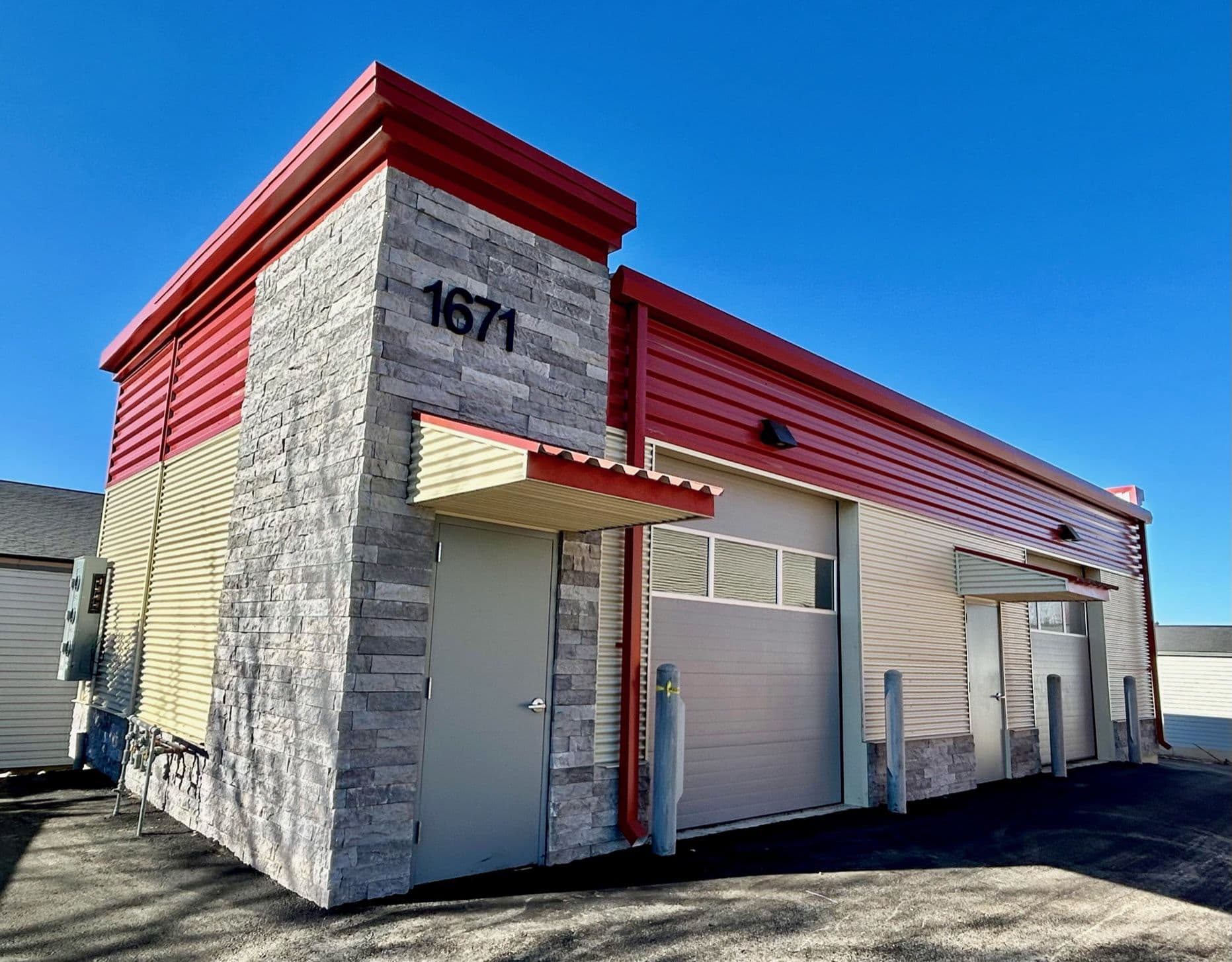
Industrial Flex Space Roofing changes access, staging, and risk below the roof
One low-slope roof, several tenants, and years of undocumented penetrations from equipment that came and went. Flex roofing is a coordination problem as much as a membrane one.
Flex space is the chameleon of the commercial inventory. One building might hold light manufacturing in one bay, a distribution operation in the next, a tech company's lab in a third, and a service contractor's shop in a fourth, and those uses shift around as leases turn over. The roof has to perform across all of that: different mechanical loads, different rooftop equipment, and a tenant mix that changes every few years. We approach a flex roof knowing it has to outlast several occupancy cycles, not just serve whoever is in the building today.
Grand Rapids has a deep flex inventory because of how its industrial base is built. The classic flex parks sit through Kentwood and Wyoming along the 36th Street, 44th Street, and Roger B. Chaffee corridors, with more out by the airport near Patterson Avenue and across the Walker and Comstock Park districts. The stock ranges from 1970s and 1980s tilt-wall buildings with original built-up roofs to newer pre-engineered metal buildings, and a lot of it is held by investors and property managers running multiple buildings at once. That mix of ages, deck types, and ownership is exactly what shapes how we scope these roofs.
A single-user industrial building has a roof someone planned. A multi-tenant flex roof has a roof that accumulated. Every tenant improvement that added an HVAC unit, ran new electrical or gas, or set rooftop equipment punched the membrane, often outside the original loading plan and almost always without ending up in the property records. So we start every flex scope with a penetration inventory survey before any membrane work, photographing and mapping each penetration and comparing it to the original drawings where they exist. The point is not that past contractors cut corners, it is that years of tenant-driven changes leave a roof nobody has a complete map of, and warranty disputes start exactly there.
What goes on the roof depends on what the deck is and how much disruption the current tenants can absorb. For tilt-wall and concrete flex buildings, 60-mil TPO mechanically attached over new polyiso is the workhorse and the most cost-effective approach. Buildings with heavy rooftop equipment density, or a lot of foot traffic from multiple tenants' HVAC contractors, justify stepping up to 80-mil TPO or 60-mil PVC fully adhered for the extra puncture and traffic resistance. Pre-engineered metal buildings are a different decision: a standing-seam recover or a coated-metal system often extends service life without a full teardown, depending on panel condition and purlin spacing.
Multi-tenant work lives or dies on coordination. We start with a bay-by-bay occupancy map and lease-contact list from property management, identify which tenants have active rooftop equipment, which bays sit vacant, and which tenants are sensitive to noise or HVAC downtime. Sequencing and daily dry-in plans run through the property manager. Tenants get advance notice, but they communicate through management rather than directly with the crew, which keeps the job from being pulled in five directions at once.
The defining feature of a flex roof is how many things stick through it. Each rooftop unit, exhaust fan, plumbing vent, gas line, and conduit run is a place water can get in, and a multi-tenant building can carry dozens of them across its bays. The flat low-slope profile that makes these buildings cheap to build also means water does not run off quickly, so any penetration that is flashed poorly or any internal drain that clogs turns into a problem fast. We detail every curb and penetration to shed water and keep the drain and scupper layout clear, and on Michigan buildings we pay attention to how snowmelt and ice loading behave around that crowded penetration field over a winter, because that is when marginal flashing details give out.
Questions We Answer Before Work Starts
How do you decide whether Industrial Flex Space Roofing needs repair or replacement?
We start with roof condition, moisture concerns, drainage, age, access, and recurring leak history. Repair is recommended when it solves the problem cleanly. Replacement is discussed when repeated repairs are only chasing symptoms.
Can the building stay open during industrial flex space roofing work?
Most commercial roof work can be staged around an active building when access, loading, noise, odors, and end-of-day dry-in are planned before crews arrive.
What do owners receive after an inspection?
Typical documentation includes photos, notes on membrane and metal conditions, drain observations, repair priorities, and a practical next-step recommendation.